


New York’s financial services, housing, infrastructure, and technology sectors could become the focus of a state-specific digital asset initiative under a proposed framework from Crescite that envisions tokenization strategies across all 50 US states.
The proposal, known as the Tokenization, Opportunity, Knowledge, Economic Security, and National Innovation (TOKEN) Act™, seeks to establish a national framework for using digital assets to support economic development, expand access to capital, and bring real-world assets onto blockchain networks.
Developed by Catholic Token co-founders Eddie Cullen, CEO of Crescite, and Karl Kilb, chairman of the company, the initiative introduces a model that combines nationwide regulatory standards with state-level strategies reflecting regional economic priorities.
Under the concept, the proposed New York Token™ would focus on finance, housing, infrastructure, and technology, positioning the state’s existing economic strengths as the foundation for its tokenization strategy.
A state-by-state strategy for digital assets
The TOKEN Act™ proposes a national standard alongside individual token frameworks for each state. The model is intended to connect blockchain-based financial mechanisms with local investment priorities rather than treat tokenization as a single, uniform market.
The proposal also advocates for federal and state governments to issue tokens under appropriate oversight, with the stated objective of reducing public debt and working toward budget surpluses.
Beyond government participation, the framework seeks to open new financing pathways for small businesses, infrastructure projects, and communities that traditional financial institutions have often overlooked.
Its seven pillars cover regulatory clarity, consumer protection, real-world asset tokenization, public-sector ethics, financial security, access to capital, and national leadership in responsible innovation.
The consumer protection component includes custody, segregation, disclosure, and anti-fraud safeguards. The proposal also addresses money laundering and sanctions compliance while introducing party-neutral conflict-of-interest standards for public officials.
Moving financial innovation toward the real economy
The initiative is designed to shift the digital asset conversation away from speculative market activity and toward the economic applications of blockchain technology.
“For too long, the conversation about digital assets has been about price charts and speculation. The TOKEN Act™ changes the question to what this technology can build. This is technology for good, and it should lift every family, not just a few.”
Cullen’s vision centers on using tokenization to support tangible economic activity, including investments in homes, power plants, farms, factories, and roads.
Kilb brings extensive legal and financial services experience to the proposal. He spent 22 years at Bloomberg LP, including more than 15 years as the company’s first general counsel, and currently serves as a partner at Dunnington, Bartholow & Miller LLP and an adjunct professor at Fordham University School of Law.
Cullen previously served as a staffer for President Biden and directed Fordham University’s incubator program. He is also CEO of Crescite, the exclusive protocol development firm for Catholic Token, which describes itself as the world’s first faith-based token.
The TOKEN Act™ is a proposed policy framework and has not been enacted into law. Its state-level model and government issuance proposals would require further development and institutional participation.
More information about the framework, including its proposed state-level concepts, can be found at thetokenact.com.
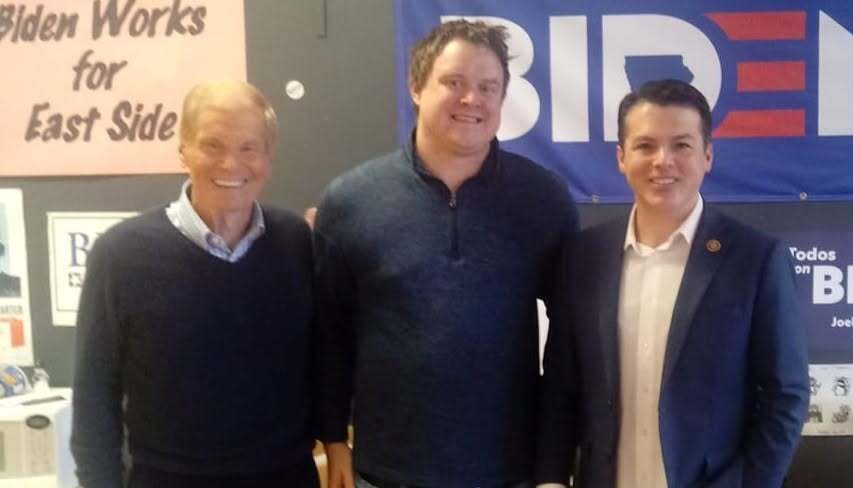
Featured image: Eddie Francis Cullen with Congressman Brendan Boyle and Bill Nelson.