


New York City has become a major intersection for technology and life sciences. The city’s life sciences ecosystem now includes more than 500 R&D-stage companies and nearly 20,000 jobs, while its broader technology ecosystem counts more than 25,000 startups. AI is increasingly connecting those two sectors.
The next question is how those technologies will change the way scientific information is communicated.
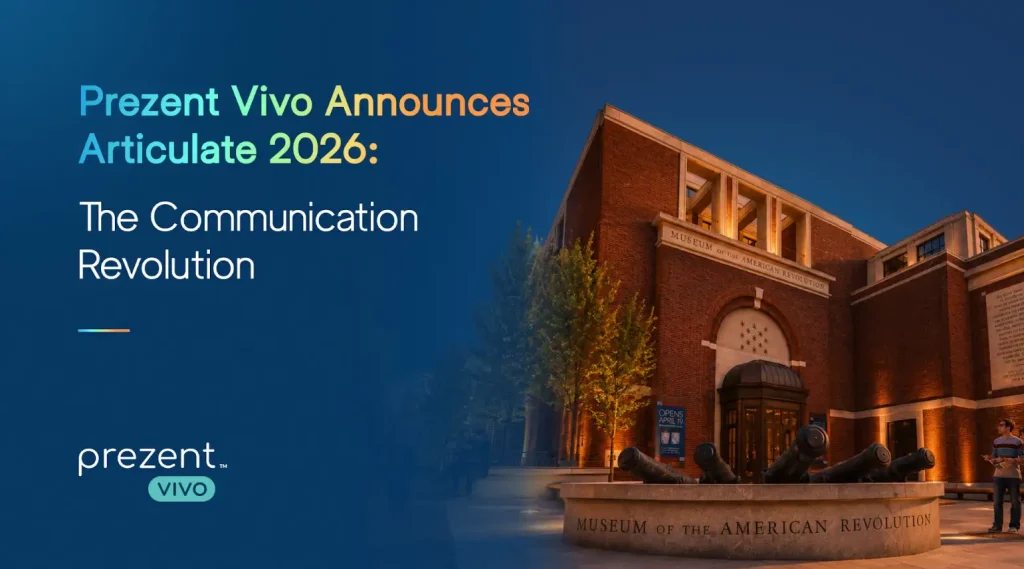
That will be the focus of Articulate 2026, an executive summit organized by Prezent Vivo that will bring together more than 100 biopharma leaders to examine how AI, human expertise and scientific communication are evolving together. The event will take place October 1 at the Museum of the American Revolution in Philadelphia.
The event arrives as pharmaceutical and biotech companies move beyond experimenting with generative AI and begin looking at how the technology can be integrated into workflows across Medical Affairs, Medical Communications, Commercial, Market Access and Field Medical.
Where AI meets scientific communication
For life sciences companies, the challenge is not simply generating information. Research findings, clinical data and medical evidence need to move between teams and eventually reach audiences that include healthcare professionals, executives, regulators and commercial organizations.
Articulate 2026 will examine that process through executive conversations, case studies, live AI demonstrations and discussions about how organizations can use technology while maintaining scientific rigor and human oversight.
The speaker lineup includes Aabhas Paliwal, Director, IT Business Partner at Amneal Pharmaceuticals; Alice Choi, COO at Prezent Vivo; Antti Kourula, Global Head of Market Access at CSL; Anubhav Srivastava, Associate Director – AI Engineering & Generative AI at Novo; Anupam Rastogi, Managing Partner at Emergent Ventures; Dymeka A. Harrison, MBA, Founder & Managing Principal at Blueprint Advisory Dx; Erin Krolikiewicz, Global Head of Talent Strategy, Pharma at Roche; and Francine Carrick, President at Prezent Vivo.
The event will also feature Frank Desvignes, Founding Partner at True Global Ventures 4 Plus & 5 Opportunity Fund; Gwendolyn Whitney, Former President, US Commercial at Amicus Therapeutics; Jamie Leong, Global HR Business Partner at Discovery Solutions; Jeanna Cooper, Regional Medical Affairs Director- North at Crinetics Pharmaceuticals; Joe Walsh, Founder and Chief Product Officer at Canopy Life Sciences; Julie Guery, Global Regulatory Affairs Labeling Head at Sanofi; Kevin Kallmes, Chief Executive Officer at Nested Knowledge; and Kieran Chacko, BioTech Investor.
Other speakers include Kristen Binaso, RPh, Senior Director, Professional Society Engagements & Educational Partnerships at BridgeBio; Lauren Pattani, MBA, AI Transformation Lead at Pfizer, Inc.; Manish Tewani, Director, HCP Marketing at Neurocrine Biosciences; Marine Queniart-Stojanovic, Senior Executive Board Member at Prezent Vivo; Matthew Skic, Director of Collections & Exhibitions at the Museum of the American Revolution; Mike Edwards, Executive Director, Marketing Strategy – Rheumatology at Novartis; Nick J. Romano, U.S. Oncology Director, Learning Strategy at Bayer; and Rajat Mishra, Co-Founder & CEO at Prezent Vivo.
The lineup is completed by Rebecca Goldstein, Executive Medical Director at Abeona Therapeutics; Sean Sheffler-Collins, PhD, Director, Scientific Communications & Content at Astellas Pharma; Steven Birdsall, Chief Revenue Officer at Alteryx; Vijeta Makkar, Director, Radiopharmaceutical Strategy at Novartis; Vivek Mukhatyar, Medical Affairs AI Leader at Pfizer, Inc.; and Zhen Su, MD MBA, President & Chief Executive Officer at Marengo Therapeutics.
The agenda is designed around the practical side of AI adoption. Sessions will examine how scientific ideas travel from clinical trials to practice, how AI is changing the craft of scientific communication, what biopharma can learn from technology and venture capital, and how organizations are addressing resistance to new technologies.
For a city where technology and life sciences increasingly overlap, the discussion highlights another dimension of AI adoption: not only how companies use the technology to analyze or generate information, but how they ensure that complex scientific knowledge remains clear and actionable as it moves through the organization.